When the British troops launched an attack on Gloucester in 1775, they did so in their distinctive bright red coats, white waistcoats and breeches. The Americans, however, had not yet acquired a look as recognizable as their enemy’s. Because there was no organized national army when the Revolutionary War began, there were no American uniforms for the first years of the war. During the early battles, the scrappier American soldiers’ attire reflected the young nation they were fighting for. Militiamen used the civilian clothes they already owned, and soldiers typically wore everyday attire, farming or hunting clothes into battle.
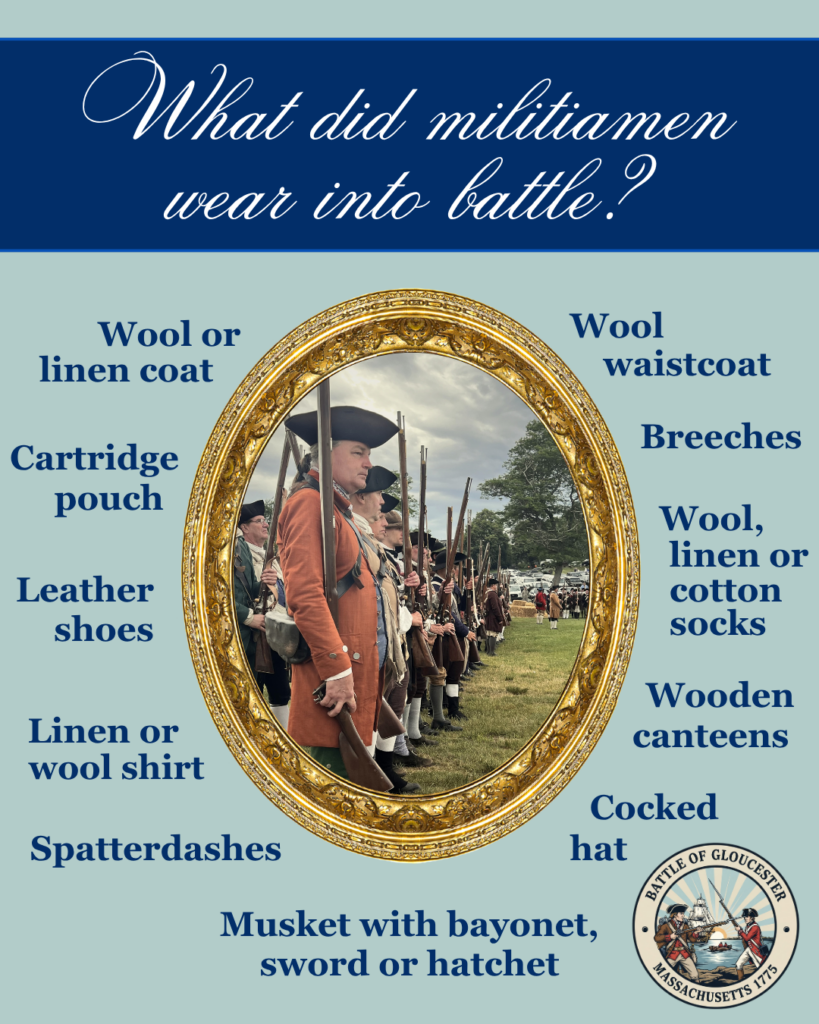
With a lack of official uniform, the American side of the battlefield was a sea of mismatched civilian clothes and weapons. This is what a typical soldier might have worn during the Battle of Gloucester.
- Shirt: Men wore loose-fitting, white, natural or checked linen shirts under waistcoats and coats. Shirts fell to the mid-thigh or knee length and were also worn for sleeping. Wool flannel shirts were worn in colder months.
- Waistcoat: Waistcoats were vest-like garments made of brown, green, red, blue, gray or black wool. These hip-length coats were worn over shirts and underneath coats.
- Coats & jackets: Coats and jackets fit snugly and were worn in all seasons. Wool garments were brown, green, red, blue, gray or black, while linen coats and jackets were natural, blue or brown. Coats were knee-length and were worn with waistcoats, while buttoned jackets did not require a waistcoat. They were hip-length and had shorter, pleated skirts, cuffs and a collar.
- Neckwear: Handkerchiefs and neck cloths made of white linen, cotton or silk were worn by older men and tucked into the waistcoat. Laboring or lower class men wore patterned and colored handkerchiefs tied snugly over the shirt collar.
- Hats: Many soldiers wore round or cocked hats, which were folded and pinned on one or more sides. Officers were identified by a colorful decoration called a cockade, which they added to their hats. Warmer wool or cloth caps were worn during the winter.
- Breeches: Made of broadcloth, buckskin, linen or wool fabric, breeches fit snugly around the leg and looser towards the hip to allow movement. Buckled or tied knee bands were used to secure breeches and socks in place.
- Shoes and stockings: Knitted wool, linen or cotton stockings were typically black, blue, white, gray or natural colors and worn above the knee. Men commonly wore black leather shoes with buckles or laces. Leather or drab wool spatterdashes were sometimes worn over shoes to protect them from dirt.
- Weapons & ammunition:
- Typical weapons included muskets or firearms with bayonets, swords and hatchets. Some officers had pistols.
- Soldiers carried powder horns and soft pouches filled with bullets during the early years of the war, or stored pre-rolled cartridges in cartridge boxes.
- Miscellaneous items:
- Canteens: Wooden canteens were used to carry and store water.
- Knapsacks: Colonial knapsacks were typically made of hemp canvas or heavy-weight linen and had a single pouch with a flap closure.